Death Valley from Las Vegas: How Far and How to Get There
How far Death Valley is from Las Vegas — about 120 miles and 2 to 2.5 hours each way — the routes, guided tour vs self-drive, and the fuel, water and no-signal essentials.
Death Valley feels remote, but it’s one of the easier big national parks to reach from a major city — it sits a couple of hours west of the Strip. The distance and the desert conditions, though, are exactly what catch self-drivers out. This guide covers how far it really is, the routes, the choice between a guided tour and driving yourself, and the fuel-water-and-signal essentials nobody should skip. For the tours themselves, see our guide to Death Valley tours from Las Vegas.
How Far Is It?
The heart of the park, the Furnace Creek area, is about 120 miles (about 193 km) from Las Vegas. The National Park Service puts the drive at about 2 hours each way; a route planner, which runs slower on desert roads, gives 2 hours 40 minutes from the Strip. As a day trip that means 9 to 11 hours door to door once you add the stops inside the park, so it’s a full day out rather than a quick half-day excursion.
A few stops sit a little closer or farther depending on the route and where you enter, but Furnace Creek and the 120-mile / two-hours-ish rule of thumb is the number to plan around.
The Routes
There are two common ways in from Las Vegas:
- The direct route, via Pahrump. The park service’s own directions: NV-160 west to Pahrump, Bell Vista Road (it becomes Stateline Road in California) to Death Valley Junction, right onto CA-127 and a quick left onto CA-190. About 120 miles and 2 hours to Furnace Creek.
- The ghost-town route, via US-95 north to Beatty and NV-374. Longer, about 160 to 170 miles on a route planner, but it brings you in past the Rhyolite ghost town just over the Nevada line.
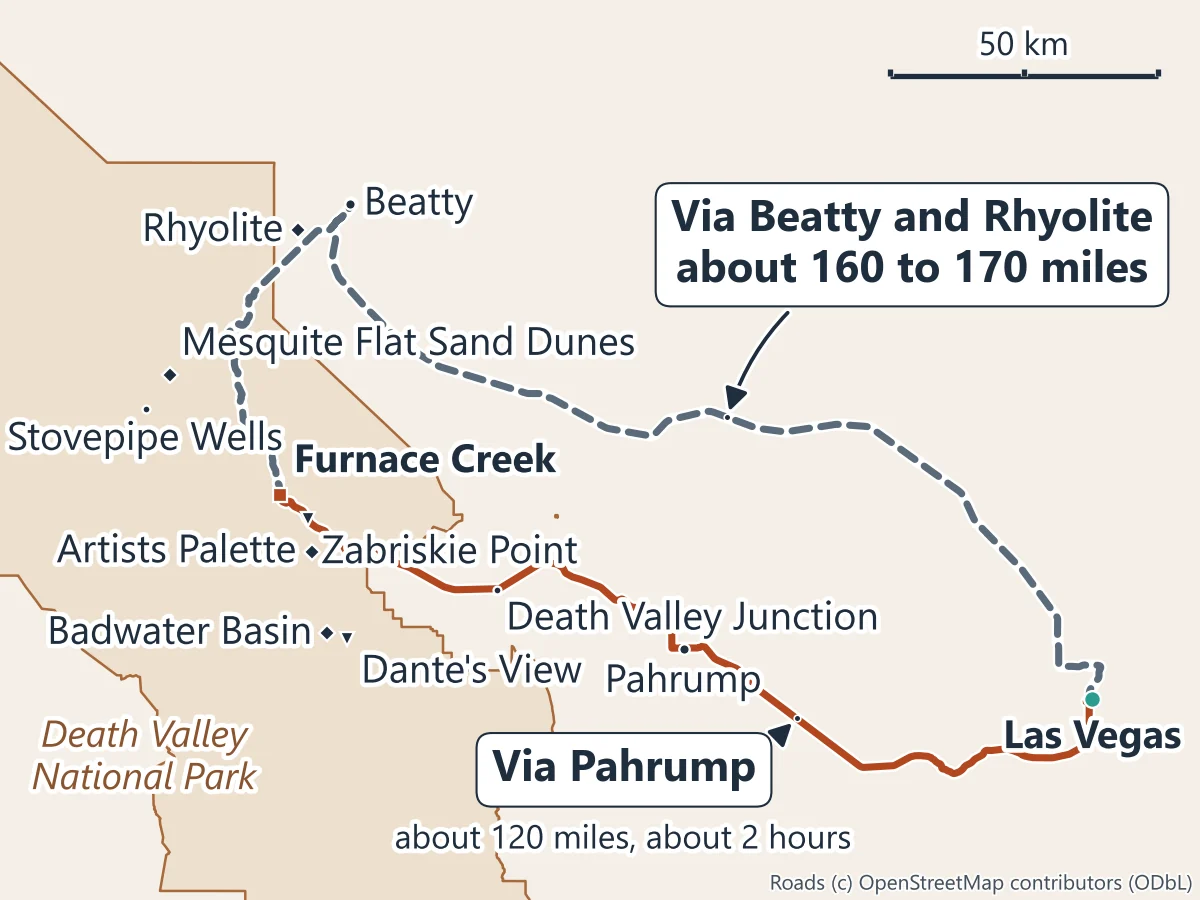
Once you are in, Zabriskie Point, Artists Palette, Badwater Basin and Dante’s View lie south and southeast of Furnace Creek; the Mesquite Flat Sand Dunes and Stovepipe Wells lie to the northwest. Either way you cross open Mojave Desert with long gaps between services, so the route choice matters less than being ready for the conditions.
Guided Tour vs. Driving Yourself
You can absolutely self-drive, and for a multi-day trip it gives you freedom. For a single day, though, a guided tour quietly wins for most visitors, because it removes the parts that trip people up:
- No rental car, navigation, or parking — pickup is included at your Las Vegas hotel or a Strip meeting point.
- The driving is handled across the long, sometimes featureless desert stretches, so you arrive fresh.
- Water and the park entrance fee are included, and the guide times stops to dodge the worst midday heat.
- The drive becomes the tour — the geology and history fill the hours instead of empty highway.
Self-drive makes sense if you want to set your own pace, linger at specific spots, or build a longer itinerary. If you’d rather just see the park without managing the logistics, guided is the easier call — see is a Death Valley day trip worth it for who suits which.
If You Self-Drive: The Non-Negotiables
The desert is unforgiving, so treat these as essential rather than optional:
- Fuel up before you leave. The park has three gas stations, at Furnace Creek, Stovepipe Wells (regular only, no diesel) and Panamint Springs, and the distances between them are long. Start with a full tank.
- Carry far more water than feels necessary — for drinking and for your radiator. This is the hottest, driest park in North America; running short of water here is a genuine emergency, not an inconvenience.
- Expect no cell signal. Coverage across most of the park is nonexistent, so download maps offline, tell someone your plan, and don’t rely on your phone for navigation or help.
- Mind the heat and the roads. In summer, midday heat is dangerous; stick to early and late hours. Flash floods can close roads with little warning, and many backcountry routes need high clearance or 4WD — check conditions before you go.
- Pay the entrance fee. Death Valley charges $30 per car, valid seven days, by card or digital payment at the visitor center, a ranger station or the fee machines; guided tours fold it into the price. Neither Death Valley nor Joshua Tree is on the 2026 list of parks that charge non-residents an extra $100.
When to Make the Trip
Distance aside, timing decides how the day feels. The comfortable window is October through April; in summer, go on an evening or sunset-and-stargazing departure rather than driving yourself into midday heat. The full season breakdown is in the best time to visit Death Valley from Las Vegas, and the park’s headline stops are in what to see in Death Valley. Thinking of Joshua Tree instead? It is around 180 to 195 miles from Las Vegas by road: Joshua Tree vs Death Valley compares the two.
Ready to Book?
If you’d rather skip the fuel-stops-and-no-signal planning, let a guide handle the drive. Compare the tours on the home page, where cancellation terms are shown on each listing, then check availability for your dates.
See Death Valley from Las Vegas — Book Your Day Trip
From a classic full-day tour to a sunset-and-stargazing run, hotel pickup, park entrance fees, water and a guide who knows the heat are all included, and the featured day tour cancels free up to 24 hours before (checked October 2026).
Check Availability & Book